












Webhooters

Author name: Mahima Chawla

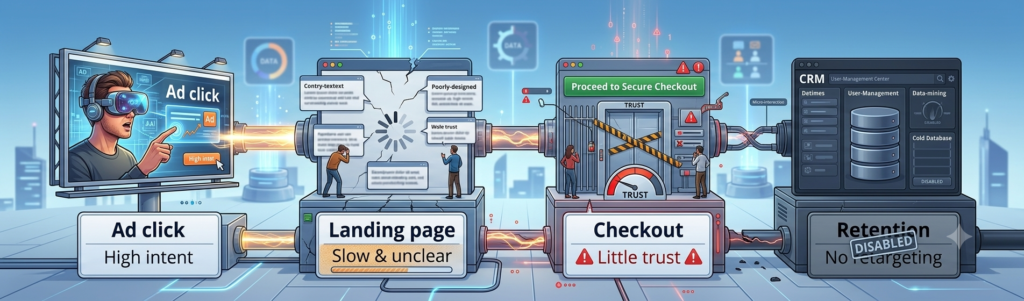
Diagram of the PPC customer journey — ad click, landing page, checkout, retention — showing where sales typically leak at each stage

Why Are There No Consistent Sales Results From Your PPC Campaign? Here are 7 Reasons why

If you’re getting inconsistent PPC sales results, you’re not imagining it, and it’s not bad luck. You’re spending money every day — some days it converts, some days it doesn’t, and nobody can tell you why. That kind of inconsistency is rarely the platform’s fault. It’s almost always a sign that your PPC campaign is running as a set of ads — not as a system. Here’s what’s actually behind it. Inconsistent PPC Sales Results? Here’s Why (7 Reasons) 1. You’re optimising for clicks, not profit Google and Meta will happily get you clicks all day. Clicks aren’t the problem — inconsistent revenue is. If your campaigns are judged on CTR or impressions instead of ROAS and CAC, you’re optimising for the wrong scoreboard. The algorithm follows whatever signal you feed it, so if you’re not tracking purchase value properly, it’ll keep bringing you traffic that looks fine and converts unevenly. 2. Your funnel has leaks that the ad account can’t fix A strong campaign can still produce patchy sales if the landing page, checkout, or offer isn’t pulling its weight. Slow load times, unclear value proposition, a clunky checkout, or weak trust signals will quietly kill conversions — no amount of bidding strategy fixes that. Before touching the ad account, most brands need to fix the leak downstream of the click. 3. Creative fatigue is setting in faster than you’re refreshing it The same three ad creatives running for six weeks straight will always produce a declining, inconsistent curve. Audiences stop responding once they’ve seen a creative too many times, and performance dips even though nothing “changed” on your end. Consistent results need a creative pipeline — not a one-time production run. 4. Your targeting is too broad or too narrow Broad targeting with a small budget spreads spend across low-intent audiences, so some days you get buyers, some days you get browsers. Overly narrow targeting does the opposite — you exhaust the audience and performance swings once the algorithm has to search harder. Neither gives you a stable, repeatable result. 5. You’re missing the retargeting and retention layer First-click sales are the least predictable sales you’ll ever get. Brands with consistent PPC performance aren’t just running cold campaigns — they’re capturing abandoned carts, retargeting high-intent visitors, and using WhatsApp or email to bring warm traffic back. Without that layer, every day resets to zero and results will always look erratic. 6. The campaign is still in (or was pushed out of) its learning phase Every time you make major edits — budget jumps, audience changes, new creative sets — the algorithm re-enters a learning phase and performance gets volatile before it stabilises. Frequent, well-intentioned tinkering is one of the most common reasons “nothing is consistent,” because the campaign never gets the stable window it needs to optimise. 7. Attribution is telling you a partial story If you’re reading results from a single dashboard without accounting for view-through conversions, multi-touch journeys, or platform-reported vs. actual revenue, you’re not looking at inconsistent sales — you’re looking at incomplete data. Fixing your reporting is sometimes the fastest way to “fix” the inconsistency, because it was never actually there. What consistent PPC performance actually requires Stable, repeatable sales don’t come from a better bid strategy alone. They come from a system: intent-based targeting, a funnel that doesn’t leak, a live creative pipeline, retargeting and retention working alongside acquisition, and reporting built around ROAS and CAC instead of vanity metrics. That’s the framework we run for every brand we work with — and it’s usually the gap between “we ran some ads” and “we built a growth engine.” Want us to look at what’s actually happening in your account? Get an audit of your Meta & Google Ads and a 30-minute growth call — you keep the audit either way.

Why Are There No Consistent Sales Results From Your PPC Campaign? Here are 7 Reasons why Read More »

Performance Marketing, Digital Marketing
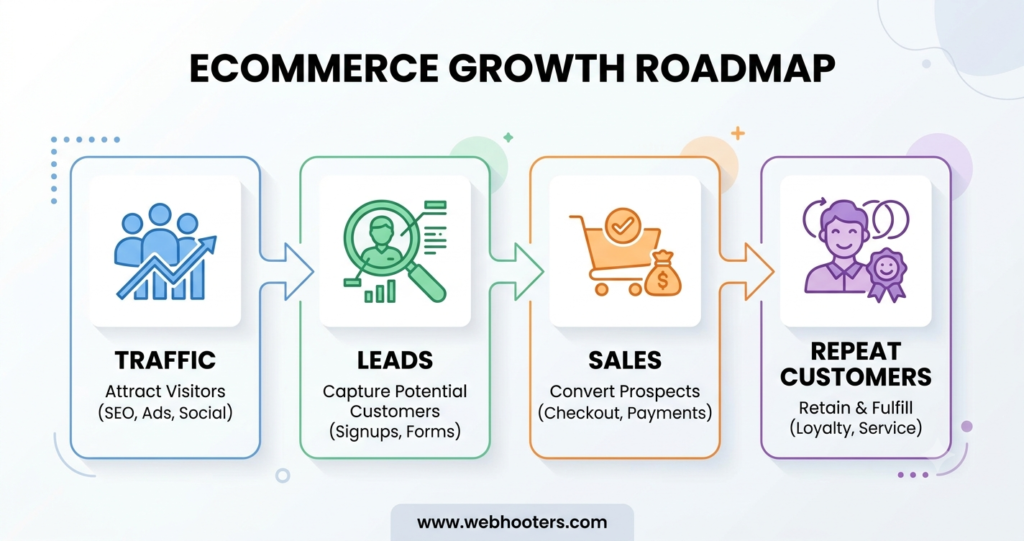
How to choose performance marketing agency for ecommerce

How to Choose a Performance Marketing Agency for Your E-commerce Brand

Choosing the right performance marketing agency for ecommerce can significantly impact your brand’s growth, profitability, and long-term success. With rising customer acquisition costs, increasing competition, and evolving advertising platforms like Google Ads and Meta Ads, ecommerce businesses need more than just traffic—they need a scalable strategy that generates measurable revenue. A specialized performance marketing agency helps ecommerce brands optimize ad spend, improve return on ad spend (ROAS), reduce customer acquisition costs (CAC), and increase conversions through data-driven campaign management. This guide explains how to evaluate, compare, and choose the best performance marketing agency for your ecommerce business so you can scale sales with confidence. What Is a Performance Marketing Agency? A performance marketing agency focuses on measurable business outcomes such as: Unlike traditional marketing agencies that focus primarily on awareness, performance marketing agencies are accountable for generating profitable business growth. Why Do E-commerce Brands Need a Performance Marketing Agency? E-commerce businesses face several challenges: A specialized performance marketing agency helps brands: How Do You Know If Your E-commerce Brand Needs a Performance Marketing Agency? You should consider hiring an agency if: Your sales have plateaued. If growth has slowed despite increasing ad spend, professional optimisation may be required. Your ROAS is declining. A decreasing return on ad spend often indicates inefficient targeting, poor creatives, or conversion issues. You Lack In-House Expertise Managing Google Ads, Meta Ads, analytics, attribution, and CRO requires specialised skills. You Want to Scale Faster An experienced agency can help identify growth opportunities and execute campaigns efficiently. What Should You Look for in a Performance Marketing Agency? The agency should have proven experience working with: Ask for: 2. Strong PPC and Paid Media Expertise A quality agency should manage: Google Ads Meta Advertising 3. Conversion Rate Optimisation (CRO) Capabilities Driving traffic alone is not enough. A reliable agency should optimise: The best agencies improve both traffic quality and conversion rates. 4. Transparent Reporting Ask how performance will be measured. Important metrics include: Avoid agencies that only report clicks, impressions, or reach. 5. Data-Driven Decision Making Successful agencies use: Every recommendation should be backed by data. Questions to Ask Before Hiring a Performance Marketing Agency What industries do you specialise in? Industry experience often accelerates results. Can you provide case studies? Look for real examples with measurable outcomes. How do you optimise campaigns? The answer should include: How often do you report performance? Monthly reporting is standard, but weekly insights are often beneficial for scaling brands. Who will manage my account? Understand whether senior strategists or junior executives will handle your campaigns. Red Flags to Avoid When evaluating agencies, watch for: Guaranteed Results No agency can guarantee sales or ROAS. Lack of Transparency Avoid agencies unwilling to share campaign performance data. Generic Strategies Every e-commerce business requires a customised growth plan. Focus on Vanity Metrics Likes and impressions do not necessarily generate revenue. Agency vs In-House Marketing Team Agency Advantages In-House Advantages Many successful e-commerce brands combine both approaches. How Much Does a Performance Marketing Agency Cost? Pricing models typically include: Fixed Monthly Retainer Suitable for brands with predictable budgets. Percentage of Ad Spend Common among scaling brands. Performance-Based Pricing Fees linked to results achieved. The right choice depends on business objectives, growth stage, and advertising budget. Final Thoughts Choosing the right performance marketing agency can significantly impact your e-commerce brand’s growth and profitability. Focus on agencies that demonstrate proven results, transparent reporting, strong e-commerce expertise, and a commitment to long-term growth rather than short-term wins. The best agency partner will not simply manage ads—they will help build a scalable customer acquisition system that drives sustainable revenue growth.

How to Choose a Performance Marketing Agency for Your E-commerce Brand Read More »

Digital Marketing, Performance Marketing
performance marketing trends 2026

Performance Marketing in 2026: The AI Takes the Wheel

The platforms changed the rules this year. The brands still running 2022 playbooks are quietly bleeding budget. Here’s what actually shifted, what the new Meta updates mean for your ROAS, and how to win in an AI-first ad world. If you’ve felt like your ad accounts have a mind of their own lately — campaigns that re-optimise themselves overnight, “recommendations” you didn’t ask for, settings that switch back on after you turn them off — you’re not imagining it. In 2026, performance marketing stopped being about who could pull the most levers manually. It became about who feeds the machine the best inputs. That’s not a slogan. Both Meta and Google have publicly committed to a future where you hand the platform a goal and a budget, and AI does the targeting, bidding, placement, and increasingly the creative itself. Meta has openly stated it expects to offer fully AI-automated campaigns — provide a business URL and a budget, and its systems handle the rest — by the end of 2026. The pieces are already shipping. For brands chasing profitable growth, this is either the best or the worst thing to happen to your ad spend. The difference comes down to how you adapt. Let’s break it down. The big shift: from operator to director For a decade, the edge in paid media belonged to whoever could micro-manage best — tighter audiences, smarter bid adjustments, endless ad-set splitting. In 2026, the algorithms do that better than any human can, in real time, across billions of signals. Meta’s consolidated AI model (internally “Lattice”) drove a reported 12% lift in ad quality, and its incremental attribution system delivered around a 24% increase in incremental conversions. Google’s message at Marketing Live 2026 was blunt: stop micro-managing creative variations and obsess over the quality of your inputs instead. Their VP put it plainly — AI is a force-multiplier of the data you give it. Feed it fragmented signals and you get fragmented results. So the job changed. You’re no longer the operator pushing buttons. You’re the director — setting the goal, supplying clean data and strong creative, and judging the output. The brands winning in 2026 made that shift early. The ones still “optimising bids manually” are being quietly out-performed by their own competitors’ algorithms. What’s new on Meta in 2026 (the updates that matter) Meta has been the most aggressive platform of all. Here’s what actually changed this year, and why each one affects your bottom line: Advantage+ is now the default — and the only road forward. New campaigns now open with Advantage+ automation switched on by default. More importantly, Meta is deprecating the older Advantage+ Shopping (ASC) and App (AAC) campaign creation paths, with the cutoff landing around 19 May 2026. Translation: the manual, fragmented setups many advertisers still rely on are on a clock. If your workflows depend on the old structure, they need migrating now. The barrier to entry just dropped. The conversion threshold to qualify for Advantage+ Shopping fell from 50 to 25 conversions per week. That opens AI-driven shopping campaigns to a much wider range of smaller and mid-size ecommerce brands that previously couldn’t meet the minimum — a genuine unlock for growing D2C businesses. Predictive Budget Allocation. Instead of spreading budget evenly across ad sets, Meta now dynamically shifts spend in real time toward whichever ad set has the highest predicted conversion probability. Done right, advertisers who consolidated fragmented campaign structures have seen CPA reductions of up to 32%. Lead-gen got a serious upgrade. Advantage+ Leads Campaigns are now global, with AI-driven instant forms, new lead-verification tools (SMS and work-email verification, with address verification in testing), and “Chat with your leads on Messenger” for instant engagement. For service businesses, edtech, and B2B, this is a meaningful jump in lead quality, not just volume. Creative is now half-automated. Meta’s Image-to-Video tool turns up to 20 product photos into polished, multi-scene video ads — no production crew required. Add AI-generated background scenes, AI music matched to a video’s emotional tone, AI dubbing, and persona-based image generation (part of the 11 AI tools unveiled at Cannes Lions 2025 and rolling out through 2026), and the cost of producing ad variations has collapsed. New scores, new controls, new rules. A Campaign/Opportunity Score (0–100) now sits in Ads Manager, grading how closely you follow Meta’s recommended setup. “Value Rules” hand back a little control — you can tell Meta to bid more for specific high-value segments without disabling automation entirely. And Meta introduced 47 new advertising policy rules in early 2026, several carrying real account-suspension risk if ignored. Compliance is no longer optional housekeeping. One honest caveat: more automation isn’t automatically more profit. Advertisers have reported surreal AI-generated visuals, settings that silently re-enable themselves, and time lost correcting the machine’s mistakes. The automation is powerful — but it still needs a skilled hand on the wheel. It’s not just Meta: the wider 2026 picture Google’s stance is the same. At Google Marketing Live 2026 the headline was “Google search is AI search” — AI Mode is turning quick lookups into longer, exploratory sessions, Performance Max is expanding across all inventory, and new lead-gen ad types in AI Mode are rolling out for education, automotive, and real estate. The common thread across both giants: first-party data is now your single most valuable asset. With browser pixels increasingly unreliable and privacy rules tightening, the old tracking stack is crumbling. The winners in 2026 are building server-side tagging, consent-mode measurement, email/SMS opt-in programs, loyalty data, and clean customer lists fed back into Meta and Google. Reports peg first-party-data’s contribution to ad revenue outcomes growing dramatically year over year. And last-click attribution? It’s effectively dead — rewarding only the final touch while ignoring the journey that actually drove the sale. How to actually get results in 2026 The platforms handed you a more powerful engine. Here’s how to make it pay: How Webhooters improves your performance marketing Here’s the uncomfortable truth about an AI-first ad

Performance Marketing in 2026: The AI Takes the Wheel Read More »

Digital Marketing, Digital Marketing Updates, Industry Trends, Performance Marketing
Web3-Future-of-Digital-Marketing

Web3 and the Future of Digital Marketing 2025

Web3 technology is reshaping the future of digital marketing by changing how we think about advertising and user engagement. Through decentralized social media platforms, blockchain-based ads, and NFTs, Web3 is transforming the marketing landscape. Web3 social platforms prioritize user control and content distribution, giving creators more autonomy over the content they produce. Additionally, blockchain is driving growth in the ads industry by providing greater transparency and secure permissions for digital advertisements. This makes it easier for businesses to run campaigns, fostering more trust and efficiency in the marketing process. In digital marketing, NFT is used to get good opportunities for new currency exchange. Or it is a non-fungible token, a unique digital property that can be bought and sold on a blockchain platform. In this blog we examine the future of digital marketing and what Web3 is . What Is Web3 Technology? Source: Medium Over the past years, the concern about keeping data confidential has grown and the consequences have increased. Opposition and consumers alike have had to ask tough questions and in the rapidly evolving digital ecosystem, companies should share, sell and use data across platforms. The evolution of the Internet has given birth to Web3 which focuses on blockchain technology, user empowerment, and blockchain technology. Digital marketing practices are being completely transformed by a focus on privacy transparency and improved digital ownership. As brands understand evolving technologies, Web3 unique perspectives on data, digital ownership and user interaction are transforming the way businesses reach and retain their customers. Web3 And Marketing Web3 is working with a focus on rapidly changing the digital marketing landscape, placing control closer to users through a centralised platform while enabling brands to connect with their customers in new immersive and transparent ways. Driven by blockchain technology, cryptocurrency and digital applications, Web3 promises new opportunities for data privacy, consumer empowerment and digital ownership. It has been observed that as entrepreneurs look towards the future, it is a necessary step for them to understand the individual and develop their strategies Which are aligned with the developing digital ecosystem. Similarly, in at least 16 states in the US, parties are required to establish and clearly post their confidentiality policies and procedures on government websites. Data brokers and sellers work within the scope of these instructions and have greater liability if they cross the limits. To make matters more complicated for marketers, after changes in Firefox and others, browsers like Chrome are expected to use the third-party approach by the end of 2023.Apple has increased transparency of tracking for users across all of its devices and apps by giving consumers easy ways to opt-out. The Future of Digital Marketing with Web3 Web3 is opening up a decentralised future where marketers have more creative freedom while consumers enjoy a more personalised trust relationship with brands. The shift to Web3 in digital marketing enhances privacy, enables individual connections and promises to redefine strategies across the board in a completely new way. Brands that quickly adopt the potential of Web3 connect with larger customers and benefit from a loyal customer base. As Web3 technologies continue to mature, they provide innovative solutions to connect marketers on a more immersive level than they have for decades. From gamified experiences and loyalty NFTs to direct-to-consumer ads created on decentralised platforms, Web3 is shaping a new era in digital marketing. The future of digital marketing is being driven by Web3, is being transparent, is being controlled by the users and is taking place in the innovative digital ecosystem. Those who are willing to adapt will find that this feature is not only one of the new ways to reach the customer but also serves as the fundamental pillar for building the brand-consumer relationship of the future. Read More: Facebook Ads vs. Boosted Posts 3 Important Parts for Marketers in the Web3 Era Web3’s Grow is completely changing digital marketing and challenging marketers to rethink traditional strategies. Here are 3 important parts that can be helpful in Marketers effectively working to navigate Web3. Small experience ads replace ad targets The Web3 model has seen advertisers rely more on third-party cookies and user tracking to target ads. In the Web3 era, users are demanding more control over their data. And regulatory changes are putting a curb on traditional data practices. Marketers must now focus on smaller experience data because that is data that customers provide voluntarily, such as from habits, interests, or reactions. This transforms graphical experiences into user-enabled data collection by tracking the effects. Be proactive, not reactive about regulations Just as Web3 is showcasing innovative techniques like blockchain and cryptocurrency, regulatory scrutiny is increasing. Rather than waiting for the restrictions imposed on the brand to avoid potential losses, it is better to adopt a customer-centric governance in regulatory compliance by actively staying informed. This means keeping informed about developments in data security and consumer privacy laws. Also educating the team about ethical data use. Customer-centric governance helps brands advance in digital strategy. It also helps them build a commitment to transparency and accountability in the Web3 environment.   Create new approaches to Customer-Centric Marketing Non-fungible token (NFT) on the blockchain enables complete ownership of innovative, sustainable assets and is transforming the digital asset. For marketers, NFT provides an innovative way to create a customer-centric experience that goes beyond timely rewards programs. Unlike traditional digital assets, NFT provides a way for customers to own unique brand relation property; for example special content, limited editions, digital skills or even access to an event. All of these assets highlight a sense of exclusivity while also fostering deeper connections.  Conclusion The changes brought about by Web3 are radically changing the rules of digital marketing. This will pose challenges for moving from a brand-centric data model to accepting digital, user-centric data. Webhooters understands that Web3 technology provides tools for transparency, privacy, and enabling community connection by building local trust-based relationships. However, brands are well-equipped to handle related technologies and their regulatory challenges. Regulatory movement and technical work like NFT are

Web3 and the Future of Digital Marketing 2025 Read More »

All Post, Digital Marketing
SEO and AEO which is better

How important SEO and AEO for ranking? Which Marketing Approach Will Bring More Customers to Your Brand?

Explore the difference between SEO and AEO, their roles in digital marketing, and learn how to effectively implement both strategies. Discover why Webhooters is your perfect partner for mastering SEO and AEO, enhancing your brand’s visibility, and driving organic traffic.

How important SEO and AEO for ranking? Which Marketing Approach Will Bring More Customers to Your Brand? Read More »

All Post, Search Engine Optimisation (SEO)
Best Practices for Meta Ads Success-Boost Ads vs Create Ads

Facebook Ads vs. Boosted Posts: Understanding the Best Strategy for Your Marketing Goals

In the high-stakes world of social media marketing, one decision can make or break your strategy: Boost Ads or Create Ads. Will you choose the speed and simplicity of Boost Ads, designed for quick promotions? Or dive into the precision and power of Create Ads, where custom targeting and detailed campaign control can take your brand to new heights? The choice isn’t just about tactics—it’s about your business’s future. Discover which path is right for you and unleash the full potential of your advertising strategy.

Facebook Ads vs. Boosted Posts: Understanding the Best Strategy for Your Marketing Goals Read More »

Social Media, All Post
Pantone Mocha Mousse Webhooters

Pantone Colour of the Year 2025: PANTONE Mocha Mousse

Pantone’s announcement of the Colour of the Year always sets a creative ripple effect across industries, sparking inspiration and shaping global trends. For 2025, the spotlight is on PANTONE 17-1230 Mocha Mousse—a luxurious, earthy shade that captures warmth, comfort, and timeless sophistication. This colour exudes grounded elegance, making it a perfect symbol for a world seeking stability and balance amidst rapid change. In this article, we dive into the essence of Mocha Mousse, its significance, and how it will influence industries like fashion, interior design, marketing, and more. The Essence of PANTONE Mocha Mousse Mocha Mousse is more than just a color; it’s an embodiment of tranquility and connection. Its warm, neutral tone evokes the richness of soil and the indulgence of a cup of mocha, offering a grounding experience in a fast-paced, digital-first world. Pantone describes Mocha Mousse as a “shade that bridges the nostalgic past with a contemporary future,” highlighting its versatility across various applications. Why Mocha Mousse in 2025? The selection of Mocha Mousse resonates with global sentiments. As people gravitate towards nature-inspired palettes and sustainable choices, this rich yet understated tone reflects a collective yearning for harmony, self-reflection, and authenticity. The Psychology of Mocha Mousse: Calm, Resilient, and Inviting Colors influence emotions and decisions, and Mocha Mousse is no exception. Its soft brown tone brings: Mocha Mousse Across Industries Let’s explore how Mocha Mousse is already making waves in various sectors and how it will dominate trends throughout 2025. 1. Interior Design In interior spaces, Mocha Mousse is a game-changer. Its warmth transforms spaces into havens of comfort and relaxation. Here’s how it can be used: Read More: 6 Best E-commerce SEO Practices: Driving Organic Traffic and Sales 2. Fashion and Apparel Fashion enthusiasts are embracing Mocha Mousse for its versatility. It’s a neutral tone that works across seasons, offering endless styling options. 3. Branding and Marketing For businesses, Mocha Mousse is a branding powerhouse. Its earthy and approachable vibe communicates reliability and authenticity, which consumers are drawn to. 4. Digital and Graphic Design In digital platforms, Mocha Mousse offers a visually soothing yet striking aesthetic. 5. Lifestyle and Well-being Mocha Mousse promotes mindfulness and balance. Whether it’s yoga mats, candles, or journals, products in this hue inspire a sense of calm and focus. Mocha Mousse in Palettes: Pairing for Perfection A key strength of Mocha Mousse is its versatility. Pairing it with other shades can evoke entirely different moods and aesthetics. Sustainability Meets Style In 2025, sustainability is at the forefront of design and innovation, and Mocha Mousse aligns perfectly with this ethos. Its natural aesthetic encourages eco-conscious choices in materials, production processes, and consumption patterns. How Mocha Mousse Reflects 2025 Trends 2025 is a year marked by a return to essentials, and Mocha Mousse mirrors this cultural shift. As people seek to balance technology with human connection, this grounding hue becomes a symbol of our times. Key Trends Reflecting Mocha Mousse: Sustainable Innovation: Creating beauty with purpose, ensuring minimal impact on the planet. Inspiration for Incorporating Mocha Mousse If you’re excited about adding this shade to your life, here’s how to start: Pantone’s Impact: Why Colour of the Year Matters Pantone’s Colour of the Year isn’t just about aesthetics; it’s about capturing a cultural moment and driving inspiration globally. Mocha Mousse is a reminder to slow down, connect with our roots, and celebrate the beauty of simplicity. Final Thoughts on PANTONE Mocha Mousse As we embrace PANTONE 17-1230 Mocha Mousse in 2025, we’re reminded of the power of colour to influence emotions, trends, and choices. This warm, earthy tone offers the perfect balance of sophistication and comfort, making it an ideal companion for a world in flux. Whether in your wardrobe, living space, or creative projects, Mocha Mousse invites you to embrace grounded luxury and mindful living. How will you make Mocha Mousse your own? Share your ideas and inspirations as we explore the possibilities of this timeless colour together.

Pantone Colour of the Year 2025: PANTONE Mocha Mousse Read More »

All Post, Content Creation, Creativity, Industry Trends
Instagram Advertising Guide

Instagram Marketing Services To Boost Your Business with Proven Strategies

In the fast-paced world of social media, Instagram has emerged as a powerful marketing platform for businesses to reach and engage their target audiences. With over one billion monthly active users, Instagram offers unparalleled opportunities for brand visibility, customer engagement, and sales growth. If you’re looking to leverage the full potential of Instagram, you need expert guidance from the best Instagram advertising services. That’s where Webhooters Instagram marketing agency steps in to provide tailored solutions that boost your brand’s presence and drive results. Why Instagram Marketing Services Are Essential for Your Business Source: mariapeaglerdigital Instagram’s visual-first nature makes it ideal for businesses that want to connect emotionally with their audiences through captivating images and videos. Instagram marketing services focus on building a strong, recognisable brand identity, expanding your audience, and increasing conversions. Here’s why investing in Instagram marketing services is essential for your business: Read More Article: The Value of Leveraging Industry Experts in writing content Instagram Marketing Services At Webhooters Instagram marketing agency, we offer comprehensive Instagram marketing solutions designed to amplify your brand’s reach, grow your audience, and increase conversions. Whether you’re a startup looking to build a presence or an established brand aiming to enhance visibility, we provide customised strategies to meet your business needs. 1. Content Creation and Strategy Visual content is at the heart of Instagram. Webhooters excels at creating eye-catching visuals and crafting compelling narratives that resonate with your audience. Our team works with you to design high-quality images, videos, and graphics that align with your brand’s identity and values. We also develop a strategic content calendar, ensuring your posts are timed for maximum impact. 2. Account Management Managing an Instagram account can be time-consuming, but Webhooters makes it seamless. Our Instagram marketing services include end-to-end account management, from posting content to responding to comments and engaging with your followers. We ensure that your account stays active, interactive, and consistent with your brand voice. 3. Instagram Advertising Paid advertising on Instagram is a game-changer for businesses looking to scale quickly. As part of our best Instagram advertising services, we craft highly targeted ad campaigns to maximise your ROI. Whether you want to run story ads, carousel ads, or explore ads, we’ll optimise ad placements, audience targeting, and bidding strategies to reach the right people at the right time. 4. Influencer Partnerships Influencer marketing is a highly effective way to expand your brand’s reach. Webhooters helps connect you with relevant influencers who resonate with your brand’s audience. These collaborations can boost your credibility, increase your follower count, and drive conversions. 5. Analytics and Reporting Tracking the performance of your Instagram marketing campaigns is essential to refining your strategy. Webhooters provides detailed analytics and performance reports, allowing you to see which posts, ads, or stories are driving the most engagement and conversions. We continuously optimise your campaigns based on real-time data to ensure maximum effectiveness. Why Choose Webhooters for Instagram Marketing? When it comes to choosing the best Instagram advertising services, Webhooters stands out due to our client-focused approach and expertise in digital marketing. Here’s what makes us the go-to Instagram marketing agency: Best Instagram Advertising Services Offered by Webhooters At Webhooters, we believe in delivering results-driven campaigns. Our best Instagram advertising services are designed to target the right audience, boost conversions, and grow your brand. Here’s a look at the advertising services we offer: Conclusion Instagram marketing has become a vital part of modern-day business strategy, offering brands the opportunity to connect with a vast audience, drive engagement, and boost sales. By partnering with Webhooters Instagram marketing agency, you gain access to top-tier Instagram marketing services that deliver measurable results. Whether it’s organic growth through content creation or paid campaigns via targeted ads, Webhooters ensures your brand thrives in the competitive Instagram landscape

Instagram Marketing Services To Boost Your Business with Proven Strategies Read More »

Social Media, All Post
Impact of Deepfakes on Search Results

The Growing Impact of Deepfakes on Search Results

Impact of Deepfakes on Search Results: Deepfakes are reshaping how we interact with digital content. These sophisticated AI-generated media can make anyone say or do anything, leading to serious concerns about the integrity of information on the internet. As deepfakes become more prevalent, their impact on search results and online information is becoming increasingly evident. In this article, we’ll explore the Impact of Deepfakes on Search Results, the challenges they pose, and strategies to address these issues. What Are Deepfakes? Deepfakes refer to media—usually videos or audio recordings—created using artificial intelligence to manipulate or generate content that appears to be real but is entirely fabricated. The term “deepfake” is derived from “deep learning” and “fake,” reflecting the use of deep learning techniques to create these deceptive media. How Deepfakes Work Deepfakes are typically created using deep learning models called Generative Adversarial Networks (GANs). GANs consist of two neural networks: a generator and a discriminator. The generator creates fake content, while the discriminator evaluates its authenticity. Through continuous iterations, the generator improves its ability to produce content that closely resembles real media, making deepfakes increasingly convincing. The Rise of Deepfakes in Search Results As deepfakes become more sophisticated, they are beginning to infiltrate search results, creating challenges for users trying to discern accurate information. Here’s a closer look at how deepfakes impact search results: 1. Distortion of Information Deepfakes can significantly distort information by presenting false or misleading content as truth. For example, a deepfake video of a public figure making controversial statements can spread misinformation quickly. When such deepfake content appears in search results, it can mislead users and affect public perception. 2. Manipulation of Search Algorithms Malicious actors can exploit deepfakes to manipulate search algorithms. By creating and uploading numerous deepfake videos or audio files, they can potentially flood search results with deceptive content. This manipulation can obscure legitimate information and make it difficult for users to find trustworthy sources, undermining the goals of Google’s recent SEO updates aimed at improving content authenticity. 3. Erosion of Credibility The prevalence of deepfakes is contributing to a general erosion of trust in online content. As users become more skeptical of the authenticity of what they see, it becomes harder to differentiate between genuine and manipulated media. This widespread skepticism can undermine the credibility of even reputable sources. 4. Increased Demand for Verification In response to the growing threat of deepfakes, there is an increasing demand for tools and methods to verify the authenticity of digital media. Search engines, social media services, and content creators are investing in advanced technologies to detect and flag deepfake content, aiming to maintain the integrity of search results. By enhancing the verification processes across these platforms, we can better protect users from misinformation and ensure a more trustworthy online environment. Read More: Local SEO vs. Global SEO Techniques for Detecting Deepfakes Source: mdpi Detecting deepfakes is a complex task, but several methods and tools have been developed to identify manipulated content. Here are some of the most effective techniques: 1. Visual and Audio Artifacts Analysis Deepfakes often leave subtle visual and audio artifacts that can be detected through careful analysis: 2. AI and Machine Learning Algorithms AI and machine learning play a crucial role in detecting deepfakes: 3. Deepfake Detection Tools Several tools and platforms are available for detecting deepfakes: 4. Blockchain for Media Authentication Blockchain technology can be used to verify the authenticity of digital media: 5. Metadata and Provenance Analysis Examining metadata and file history can help identify manipulated content: 6. Human Expertise and Forensics While AI tools are powerful, human analysis remains critical: The Challenges of Deepfake Detection Despite advances in detection technology, several challenges remain in addressing deepfakes: 1. Adversarial Deepfakes Deepfake creators continuously evolve their techniques to bypass detection algorithms. Adversarial examples are designed to fool AI detectors, making it an ongoing battle between detection technology and deepfake creation methods. 2. Generalization Issues Detection algorithms may work well on specific types of deepfakes but struggle with new or novel methods. Ensuring that detection tools generalize across various deepfake techniques is a significant challenge. 3. Ethical and Legal Considerations The rise of deepfakes raises ethical and legal concerns, including privacy issues and potential for defamation. Developing regulations and guidelines to address these concerns while preserving freedom of expression is a complex task. Addressing the Deepfake Challenge To effectively combat the impact of deepfakes on search results and online information, a multi-faceted approach is needed: 1. Enhanced Detection Technologies Investing in and developing advanced detection technologies is crucial. Continuous improvement and innovation in AI and machine learning will help stay ahead of deepfake creators. 2. Education and Awareness Raising awareness about deepfakes and their potential impact can help users become more critical and discerning consumers of digital content. Education on recognizing deepfakes and verifying information is essential. 3. Collaboration and Regulation Collaboration between technology companies, researchers, and policymakers is necessary to develop effective regulations and guidelines for deepfake detection and prevention. Establishing industry standards and best practices can help address the challenges posed by deepfakes. 4. Ethical Standards Developing ethical standards for the creation and use of AI-generated content is important to ensure that technology is used responsibly and does not undermine trust in digital media. Conclusion Deepfakes represent a significant challenge for search results and online information integrity. As these AI-generated media become more sophisticated, their impact on how we perceive and trust digital content will continue to grow. Addressing this challenge requires a combination of advanced detection technologies, public awareness, collaboration, and ethical considerations. Webhooters Digital Marketing Agency stays informed and proactive in helping brands navigate these challenges, ensuring the credibility and accuracy of digital content. Deepfakes are not just a technological issue but a societal one, influencing how we interact with media and information. As we navigate this evolving landscape, a collective effort to understand, detect, and mitigate the impact of deepfakes on search results will be crucial in preserving the integrity of our digital world

The Growing Impact of Deepfakes on Search Results Read More »

Industry Trends, All Post
Local SEO vs. Global SEO: How to Optimise Your Strategy for Better Results

Local SEO vs. Global SEO: How to Optimise Your Strategy for Better Results

Businesses are always looking for ways to increase their visibility and more efficiently connect with their target audiences in the digital world of 2024. Choosing between Local SEO vs. Global SEO is one of the most important decisions that businesses must make these days. Both strategies have their unique advantages, but the right choice depends on your business goals, target audience, and resources. In this blog, we’ll explore the key differences between Local SEO and Global SEO, the tools you need for each, and how to decide which one is right for you. Understanding Local SEO Local SEO is the process of optimising your online presence to attract more business from relevant local searches. It aims to improve visibility in local search results, such as the “local pack” or Google Maps. The goal is to target customers within a specific geographic area, making it ideal for businesses like restaurants, retail stores, or service providers that rely on local clientele. Key Benefits of Local SEO Source: neuronimbus Essential Local SEO Tools To maximise your local search visibility, consider using the following tools: Understanding Global SEO Global SEO focuses on optimizing your website to reach a worldwide audience. It aims to increase visibility in search results across multiple countries or regions, making it ideal for businesses that sell products or services online without geographical limitations, such as e-commerce stores, SaaS companies, or digital agencies. Key Benefits of Global SEO Essential Global SEO Tools To effectively implement a global SEO strategy, consider the following tools: Read More Article: 5 reasons why it is important to take insights from Marketing Experts in Your Content Local SEO vs. Global SEO: Key Differences Both Local seo and Global SEO aim to improve your visibility in search results, but they target different audiences and use different strategies. Here are some of the main key differences between Local SEO vs. Global SEO: Deciding Between Local SEO and Global SEO in 2024 Deciding whether to focus on Local seo vs. Global SEO in 2024 depends on several factors, including: The Hybrid Approach: Combining Local and Global SEO For many businesses, the ideal strategy in 2024 may be a hybrid approach, combining both Local and Global SEO. This approach allows you to optimize for local searches while expanding your reach to a broader audience, leveraging the benefits of SEO services to maximize your visibility. For example, an e-commerce store can use Local SEO to capture customers in its hometown while leveraging Global SEO to reach international markets. This ensures you don’t miss out on potential customers at the local or global level. Local SEO Tools to Boost Your Strategy If you’re focusing on Local SEO, here are some of the best tools to consider: Global SEO Tools to Enhance Your Reach Source: peppercontent.io If Global SEO is your priority, here are some tools to help you succeed: Conclusion In 2024, the choice between Local SEO vs. Global SEO depends on your business model, target audience, budget, and growth goals. Local SEO is perfect for businesses looking to attract nearby customers and dominate their local market, while Global SEO is ideal for those seeking to expand their reach to a global audience. Consider your unique business needs, analyse your competitors, and decide on the best strategy to maximise visibility and drive growth. Whether you opt for Local SEO, Global SEO, or a hybrid approach, the right tools and a well-planned strategy will be crucial to achieving your digital marketing goals.

Local SEO vs. Global SEO: How to Optimise Your Strategy for Better Results Read More »

Search Engine Optimisation (SEO), All Post
Webhooters
Scroll to Top